
Harmon County Projected Versus Actual Release
A Harmon County projected date is a working estimate based on the sentence record, credited time, earned credits, and rules that apply to the offense. It helps corrections staff manage a sentence, but it does not prove release occurred. An actual Harmon County release record documents what the custodian did. For the Harmon County Jail, the useful record is the jail-register discharge or transfer entry. For an ODOC term, a Certificate of Release or status-change record can document the event.
A Harmon County person held before trial usually has no fixed release date. Bond may be posted, a court may enter an order, charges may change, or another agency may lodge a hold. Even a court order is not the physical exit itself. The jail must process the Harmon County change and resolve other custody authority. A person serving a sentence has a more formal computation, but that calculation can still move.
Release also differs from transfer. Harmon County transport deputies move sentenced people from the county detention center to state prisons. That movement removes the name from the local roster but keeps the person confined. The receiving ODOC record, not a guessed local release date, becomes the next source.
Find a Harmon County Release Date
Start with the last known Harmon County custodian. The Harmon County Sheriff’s current roster and the statewide ODOC lookup answer different questions. A local bond or short Harmon County sentence may never create an ODOC record. A state-prison commitment shifts the search to ODOC after intake. Federal and immigration systems are separate again.
- Identify whether the person is awaiting trial, serving a county term, committed to ODOC, or listed for a parole hearing. Use the court case and current custody source together.
- For Harmon County Jail, review the court docket for the order or sentence. Then request the Sheriff’s actual discharge-or-transfer date, time, and authority.
- For state custody, search the ODOC Offender Lookup and read the displayed status, location, and sentence terms exactly. Do not promise that it will show a public tentative date.
- If parole is involved, locate the PPB docket and its matching result. Preserve the label PRD and treat it as planning data.
- After the expected date, confirm the event with ODOC, the Sheriff record, or VINE. A receiving-agency entry can reveal a transfer instead of community release.
The full Harmon County release-record workflow covers current local custody, state transfer, court context, and the records request. It is the safer route when the custodian or destination is not yet clear.
Note: A blank current roster is an exclusion clue, not a dated Harmon County release record.
Harmon County Confidential Date Limits
Oklahoma’s public-field limits must shape any Harmon County date lookup. ODOC’s offender-information guidance says a particular incarcerated person’s release date is confidential without a legitimate authorized need. The incarcerated person receives a monthly count of days remaining and may ask a correctional records officer or case manager. ODOC calls that calculation tentative because earned-credit level, misconduct, and achievement credits can change it.
The current ODOC offender-information page is the source for that public-access limit and sentence-computation caution.
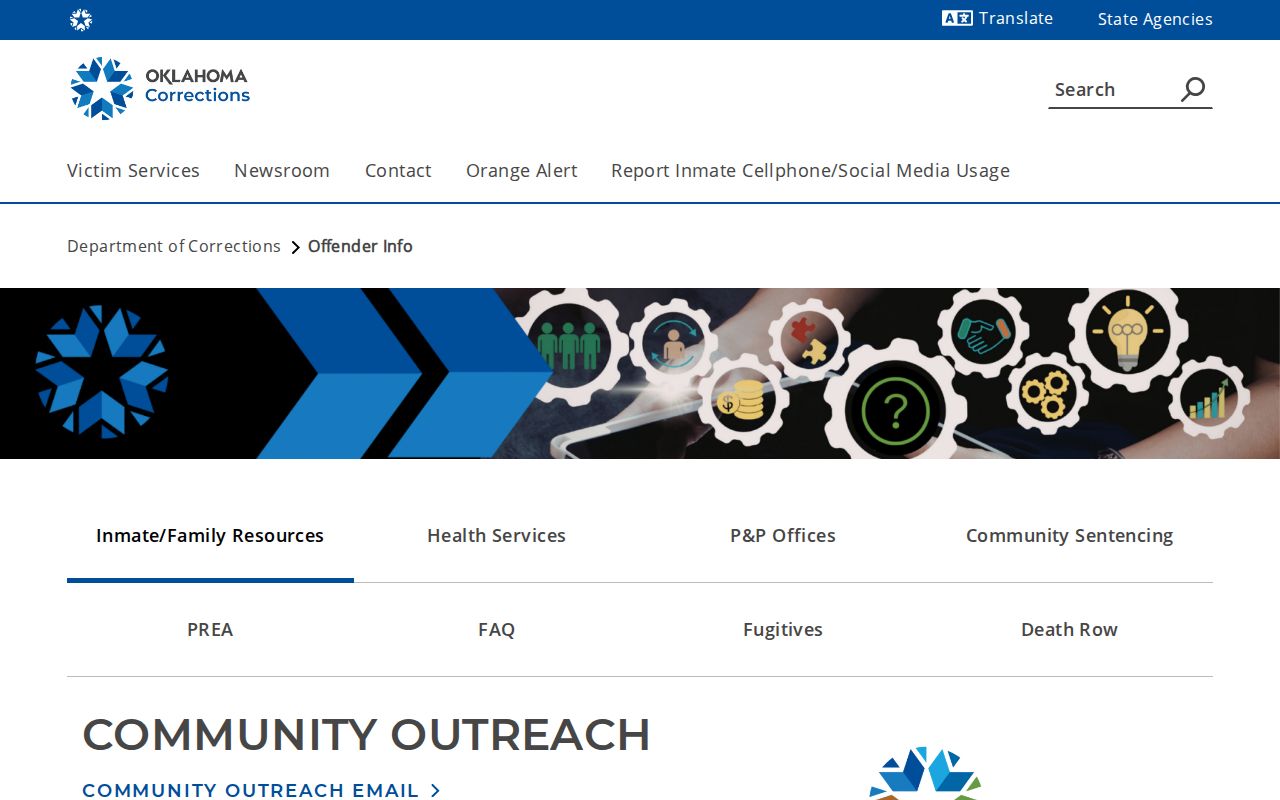
The official page supports status navigation while warning against treating an individual tentative calculation as an open public date.
If authorized information is needed, the incarcerated person’s correctional records officer or case manager is the route ODOC identifies. A member of the public should not derive a personal date from the sentence headline.
Note: ODOC’s public offender lookup supports status checks, but it does not promise public access to each person’s tentative release calculation.
Harmon County PRD Is Not Release
The Pardon and Parole Board publishes a different kind of Harmon County date. Its public docket uses the exact column heading PRD. That value supports hearing planning. It does not override ODOC’s guidance and should not be restated as a guaranteed Harmon County release date. The docket month and the corresponding result must also be checked, because a person can be passed, denied, granted, or recommended under the applicable process.
The PPB archive below shows the public docket and result route that may contain PRD.
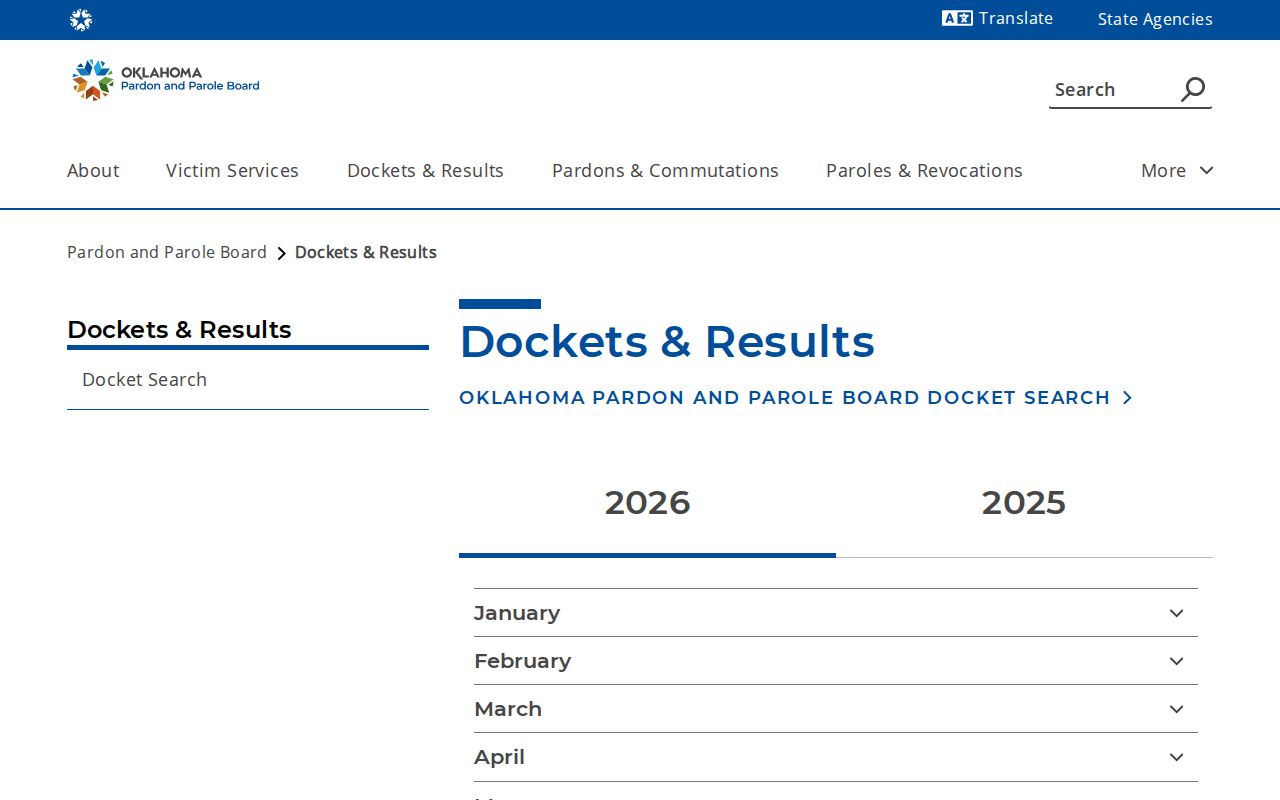
This archive helps locate planning and decision records. It does not replace the later ODOC release certificate, VINE event, or jail-register entry that shows what happened.
The key distinction is time. An imposed sentence comes from the court. A parole-eligibility date marks when consideration may become possible. PRD is a public docket label. ODOC maintains an internal tentative calculation. The actual release or transfer event is retrospective proof. Only that last layer confirms completed movement.
Harmon County Earned-Credit Rules
Oklahoma uses earned credits under 57 O.S. §138. Each credit equals one day. Credits are applied by classification and can be lost or restored under correctional rules. They should never be calculated by simply subtracting a headline monthly rate from the imposed sentence.
For a person who has ever had a felony listed in subsection E, the schedule is Class 1 with no monthly credit, Class 2 with 22, Class 3 with 33, and Class 4 with 44. For a person who has never had a listed subsection-E felony, the schedule is Class 1 with none, Class 2 with 22, Class 3 with 45, and Class 4 with 60. Life sentences do not receive sentence deductions, although participation information can still matter to parole authorities.
Many other inputs control the actual Harmon County computation. Jail credit, achievement credit, misconduct, concurrent or consecutive terms, escape or interruption time, a court correction, a new sentence, a detainer, and offense-based limits all can affect the result. ODOC policy OP-060211 is the sentence-administration source and identifies records such as the Certificate of Release and Notice of Inmate Status Change.
- Earned credit
- A statutory day credit applied under ODOC classification and sentence rules.
- Concurrent terms
- Sentences that run at the same time as ordered.
- Consecutive terms
- Sentences that run one after another.
- Detainer
- A notice that another authority seeks custody or action.
Harmon County 85 Percent Limits
The Oklahoma 85 percent rule is not a shortcut for every felony. Under 21 O.S. §13.1, a person convicted of a specifically listed offense, including covered attempt, conspiracy, or solicitation, must serve at least 85 percent of imprisonment before parole consideration. Credits cannot reduce the prison time below that floor.
Words used in a Harmon County news account or charge summary are not enough to apply the rule. The offense citation, offense date, final judgment, amendments, and sentence control. A Harmon County court case can also contain more than one count or term. Personal date calculations made from a sentence headline risk omitting the very facts that change the legal result.
Parole eligibility under 57 O.S. §332.7 is also tied to dates and offense categories. Older matters and crimes from later periods can follow different fraction rules. Life without parole, §13.1 offenses, violent categories, consecutive terms, and two-stage processes alter the path. Eligibility means consideration may occur. It does not promise a favorable decision or a physical release.
Note: Confirm the exact conviction and judgment before applying any Oklahoma sentence-credit or parole-eligibility rule to a Harmon County case.
Why Harmon County Release Dates Move
A tentative Harmon County release computation changes when the facts used by sentence administration change. Some shifts add recognized time or credits. Others remove credit, add a term, or prevent a Harmon County community exit. The source record should identify the factor instead of forcing the reader to infer it from a date that moved.
| Factor | Possible effect | Where to verify |
|---|---|---|
| Jail-time correction | Changes credit for time already held | Court order and ODOC sentence record |
| Earned-credit level | Changes the monthly credit rate | ODOC sentence administration |
| Misconduct or restoration | Removes or restores eligible credit | ODOC record under policy |
| New or amended sentence | Adds, removes, or changes a term | Court docket and updated ODOC computation |
| Consecutive case | Moves completion behind another term | Judgments and sentence administration record |
| Hold or detainer | May turn a planned exit into another-custodian transfer | Jail register, ODOC, and receiving agency |
| Parole action | Can change the route or timing but does not itself prove exit | PPB final result and later ODOC event |
Data correction can also alter a display without a new court event. ODOC warns that its public information is abbreviated and that data-source issues can occur. Save the source and access date, then seek the underlying sentence record when dates conflict.
Request Harmon County Release Records
For a Harmon County Jail event, Oklahoma’s Open Records Act supplies a stronger retrospective source than any date estimate. Section 24A.8 requires the jail register to distinguish discharge from transfer and include the time, date, and authority for that action. It also covers receipt information and bond details specified by law. Those fields can show whether a person went to the community, ODOC, or another custodian.
Submit the Harmon County Sheriff records form for a bounded booking episode. Ask for the named person’s jail-register entry, booking sheet, and release or custody-disposition entry. Include full name and, if known, date of birth, booking number, case number, or approximate date. Request the discharge-or-transfer time and authority plus the receiving agency if recorded.
A narrow request seeks existing records rather than asking staff to calculate a future date. The Sheriff states that applicable charges will be communicated and warns against sending money before the amount is known. If a release date is still in the future, the court or correctional records officer remains the source for lawful, available information.
Actual Harmon County Release Proof
The state public-record statute’s jail-register presentation is shown below through its official source.
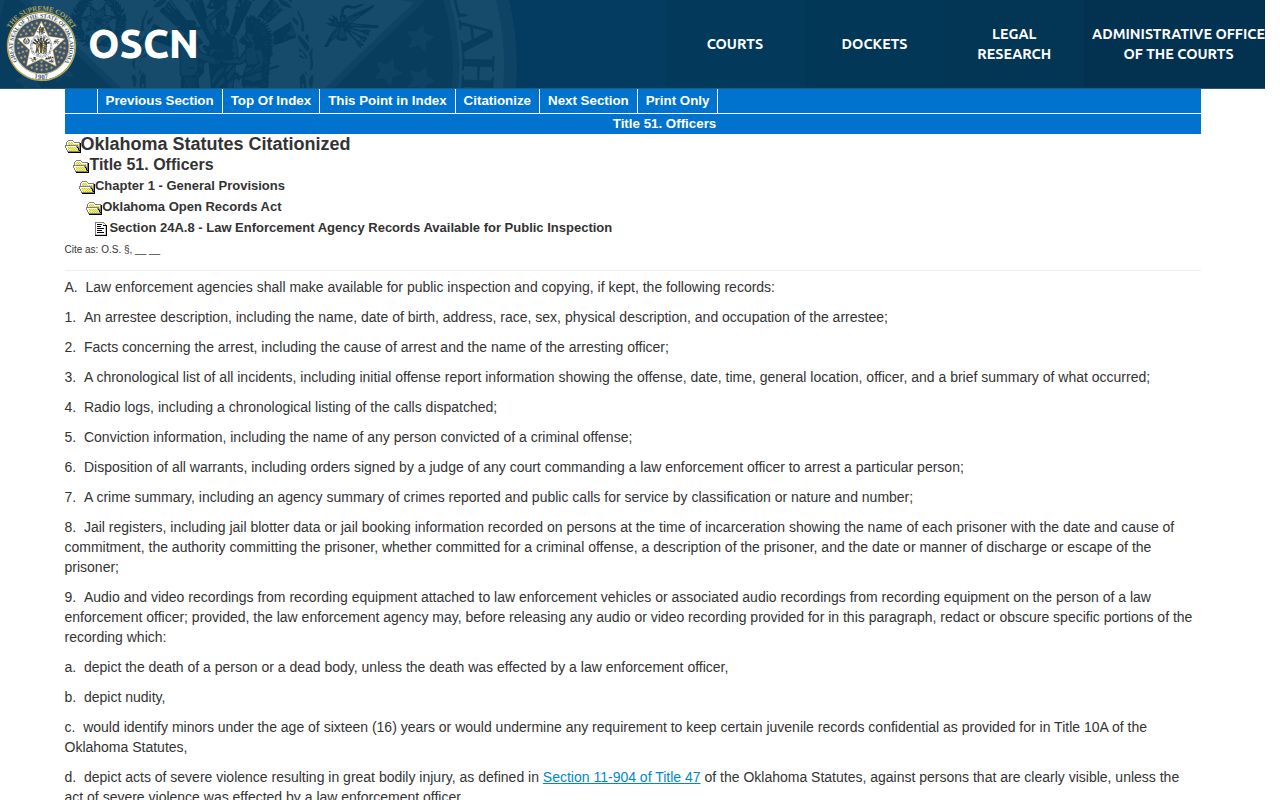
That statutory distinction prevents a county-to-ODOC transport from being misreported as release to the community. It also makes the dated register entry stronger than a public roster disappearance.
Note: Ask for both the date and authority so a Harmon County discharge is not confused with a transfer.
Confirm a Harmon County Release Date
Confirmation comes after the event. For the county jail, obtain the discharge or transfer entry. For ODOC, use the actual status-change or Certificate of Release record. When parole is part of the case, pair the board’s final result with the later ODOC event. A court disposition explains the legal basis but may not show the minute a custodian carried it out.
VINE can add timely notice from a participating custodian. Search the correct person and agency, then preserve whether the event says released or transferred. A transfer notice means custody continued elsewhere. The Harmon County VINE inmate check explains identity matching and alert registration.
Use the actual event date and name the agency. Avoid broad claims such as “fully free” when parole, probation, another sentence, or a detainer may remain. A completed prison exit can begin community supervision. Final discharge is a later and different record.
When two official systems conflict, note each custodian, status, event time, and access time. Contact the record owner with the precise mismatch. The Sheriff corrects jail movement data, ODOC controls its sentence information, and the clerk controls docket entries.