
No Harmon County 72-Hour Feed
The Harmon County Sheriff does not publish a distinct rolling 72-hour release list. Its official inmate page is a current-custody roster. It provides name search, booking time, charges, added information, booking-date ordering, and a possible image area. It does not provide a three-day release filter, a release date column, a stated update schedule, or an archive period.
That absence is independently important. A three-day page cannot be made by copying everyone currently in jail. A roster match means the local system still treats the person as in custody. A missing name could point to discharge, transfer, update lag, a spelling mismatch, or custody in a different jail. The Sheriff’s own next step is VINE when someone may have been released or transferred.
Build Harmon County Three-Day Releases
A precise three-day review begins by choosing an exact start timestamp, end timestamp, and time zone. “The last three days” can shift while an office processes the request. Fixed bounds prevent that ambiguity. Ask for existing discharge and transfer entries processed inside that range, and require the response to keep community releases apart from custodial handoffs.
- Set the exact beginning and ending timestamps for the 72-hour interval in local time.
- Search the current Harmon roster to identify people still shown in local custody.
- Use Oklahoma VINE for matched, dated custody events and preserve the displayed event wording.
- Check the ODOC offender lookup for people who may have entered state custody after leaving the county roster.
- Review Harmon County court activity through ODCR or OSCN for the order, bond, dismissal, or sentence behind a custody change.
- Submit a narrow Sheriff Records request for public discharge and transfer entries in the fixed interval.
The office may return individual jail-register entries, an existing report, or an explanation that no compiled list exists. Protected parts can be withheld or redacted. If the inquiry is actually about one named person, follow the Harmon County released-inmate verification path rather than treating a window request as a person locator.
Note: Keep a copy of the exact interval and request text so the agency response can be checked against the intended window.
Harmon County Release Request Fields
No web feed columns exist to reproduce. The field set below comes from the public jail-register facts and the focused release-record inventory supported by the research. Ask for these existing items only when they are recorded and public. A three-day request should also ask for the booking episode or identifier, which helps prevent two people with similar names from being combined.
| Requested field | Why it matters in 72 hours |
|---|---|
| Name and booking identifier | Ties each event to the correct person and custody episode. |
| Receipt date, time, and authority | Provides the start of the jail-register history for context. |
| Discharge date and time | Shows whether a community release falls within the fixed three-day span. |
| Transfer date and time | Captures movement out of the jail without mislabeling it as freedom. |
| Authority for discharge or transfer | Identifies the source of the action and where confirmation should continue. |
| Receiving agency or destination | Routes a continued-custody check to ODOC or another custodian. |
| Release type and public bond facts | Adds the recorded disposition and bond amount or recipient when applicable. |
Send the wording through the Harmon County Sheriff Records form. The form may lead to an estimate, clarification, or request to narrow the scope. The Sheriff says applicants will be told the applicable charges and should not send money before receiving the amount. Asking for electronic copies and a compact time range can make the request easier to identify, but no response speed is guaranteed.
Weekend Harmon County Release Checks
A 72-hour window is useful because it crosses several calendar dates. It can catch an event that falls outside a same-day check and reduce confusion over which day to name in a records request. That value is about the search range, not a claimed local release schedule. No official Harmon County source states special weekend or holiday release hours, a fixed exit time, or a different processing rule for those days.
Choose bounds that actually cover the period of concern. For example, a request written after a weekend should state the precise start and end timestamps instead of asking for “weekend releases.” Then compare each returned date with VINE and the case docket. A court event entered on one day may precede the physical discharge recorded by the jail. Administrative display changes may also occur after the event.
No. The window only defines the requested span. The dated Sheriff discharge entry supplies the actual event.
Note: Harmon County publishes no special weekend release practice, so avoid estimating exit times from court or bond activity.
Harmon County Release Roster Limits
The official search calls itself in-custody and gives no release window, cadence, or archive duration. This §19 roster finding shapes the whole three-day workflow. A person can fall off the display because local custody ended, but the page itself cannot say whether that happened through discharge or transfer. Recheck a recent miss, note the access time, and use the event systems.
Oklahoma law supplies a stronger documentary route. The Open Records Act presentation containing the jail-register rule identifies the public discharge or transfer time and authority fields that matter here.
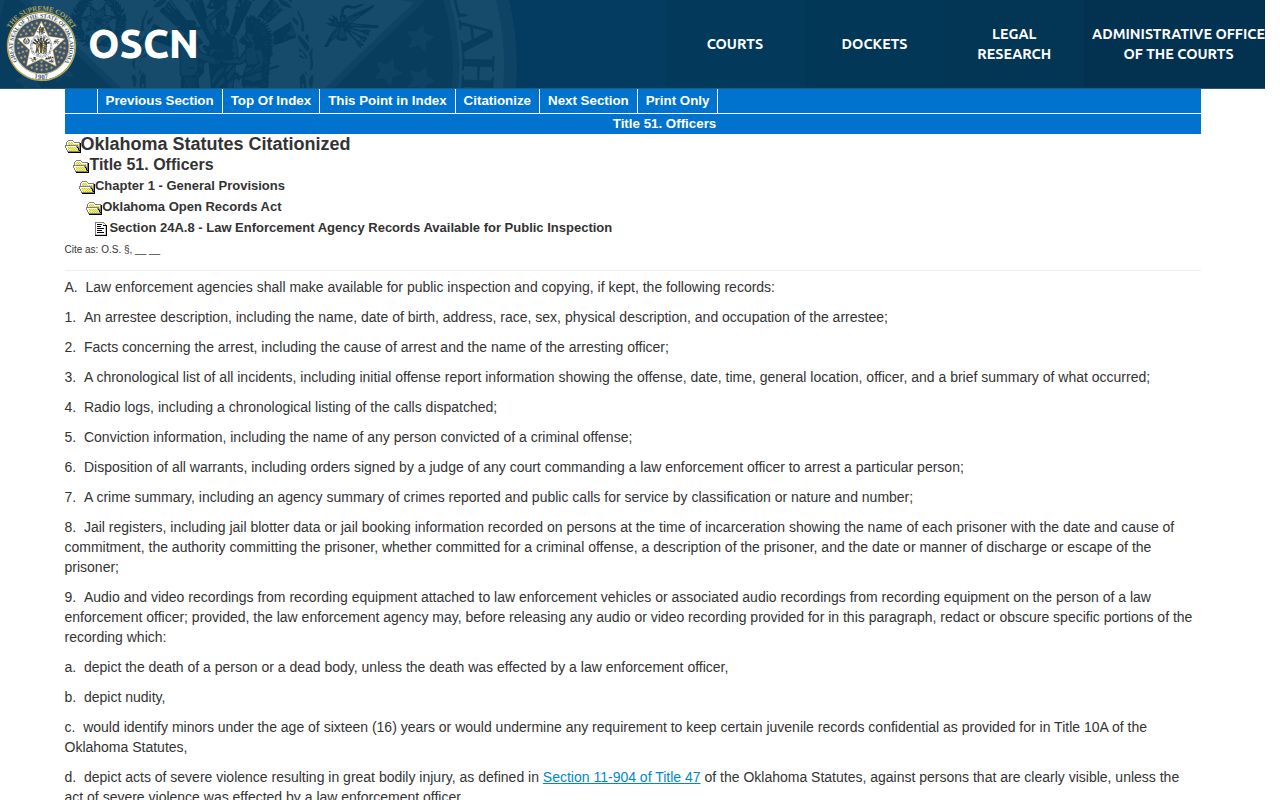
Online visibility and underlying record retention are not the same. The Sheriff has not stated how long release data remains online because no released-person view was found. The underlying jail record may still be available through Records, subject to retention rules, lawful limits, and the facts of the request. Do not publish a guessed number of days.
Separate Harmon Releases From Transfers
A three-day movement list can contain events that look alike until the authority and destination are read. Community discharge may follow bond, recognizance, time served, sentence completion, or another lawful disposition. Transfer is different. The Harmon County Sheriff Transport Division may move a sentenced person from the county detention center into an Oklahoma state prison. That person left the local roster but stayed incarcerated.
| Event | Next source | Correct reading |
|---|---|---|
| Local discharge | Sheriff entry plus court docket | County jail custody ended under the recorded authority. |
| State-prison transfer | ODOC offender lookup | Local custody ended, but incarceration continued in the state system. |
| Other-agency handoff | Named receiving custodian | The person remained held by another county, federal, or immigration authority. |
| VINE transfer event | Feeding agency and receiving system | The wording confirms movement, not community release. |
| Court release order | Sheriff discharge entry | The order may authorize release before the physical exit is completed. |
When destination matters, ask for it in the records request and preserve the agency name exactly. An ODOC result with an incarcerated status confirms that the county-roster disappearance was not a release home. If another authority took custody under a hold, warrant, writ, or detainer, that authority owns the next status check.
Note: A transfer belongs in movement data but must not be counted as a Harmon County community release.
Verify Harmon County 72-Hour Releases
VINE is the most direct event-notification fallback endorsed by the Sheriff. Search a specific person, match the feeding agency and identifiers, and read the custody status or dated event literally. A released or noncustodial event can support release from that reporting custodian. A transfer event means continued custody. A blank result may reflect spelling, coverage, lag, or archive behavior and does not settle the question.
ODOC serves people committed to or supervised by the state system. It is not a substitute for every Harmon County booking. Court records supply legal context such as a bond, dismissal, judgment, or sentence, but generally not the exact physical departure time. Sheriff Records remains the authority for the local discharge or transfer entry. If official systems conflict, record the status and access time from each, then contact the office that created the disputed record.
A matched result needs a basic identity check before it enters the three-day tally. Compare the full name, booking or offender number, agency, and any other displayed identifiers. Namesakes and alternate spellings can otherwise put the wrong event inside the window. Keep the custody layer separate from the legal layer as well. The Sheriff event answers when and how local custody ended. The docket can explain the related court action. Neither record should be made to answer the other office’s question.
The Harmon County 24-Hour Releases process fits a same-day question with tighter timestamps. The 72-hour method is wider by design. Both end at the same proof standard: identify the custodian, preserve the dated event, distinguish discharge from transfer, and obtain the agency record when an exact result is needed.